APOD.pl: Astronomiczne zdjęcie dnia
Codziennie nowy obraz lub zdjęcie naszego fascynującego Wszechświata
wraz z krótkim objaśnieniem napisanym przez zawodowego astronoma.
Zobacz więcej!
20 maja 2008
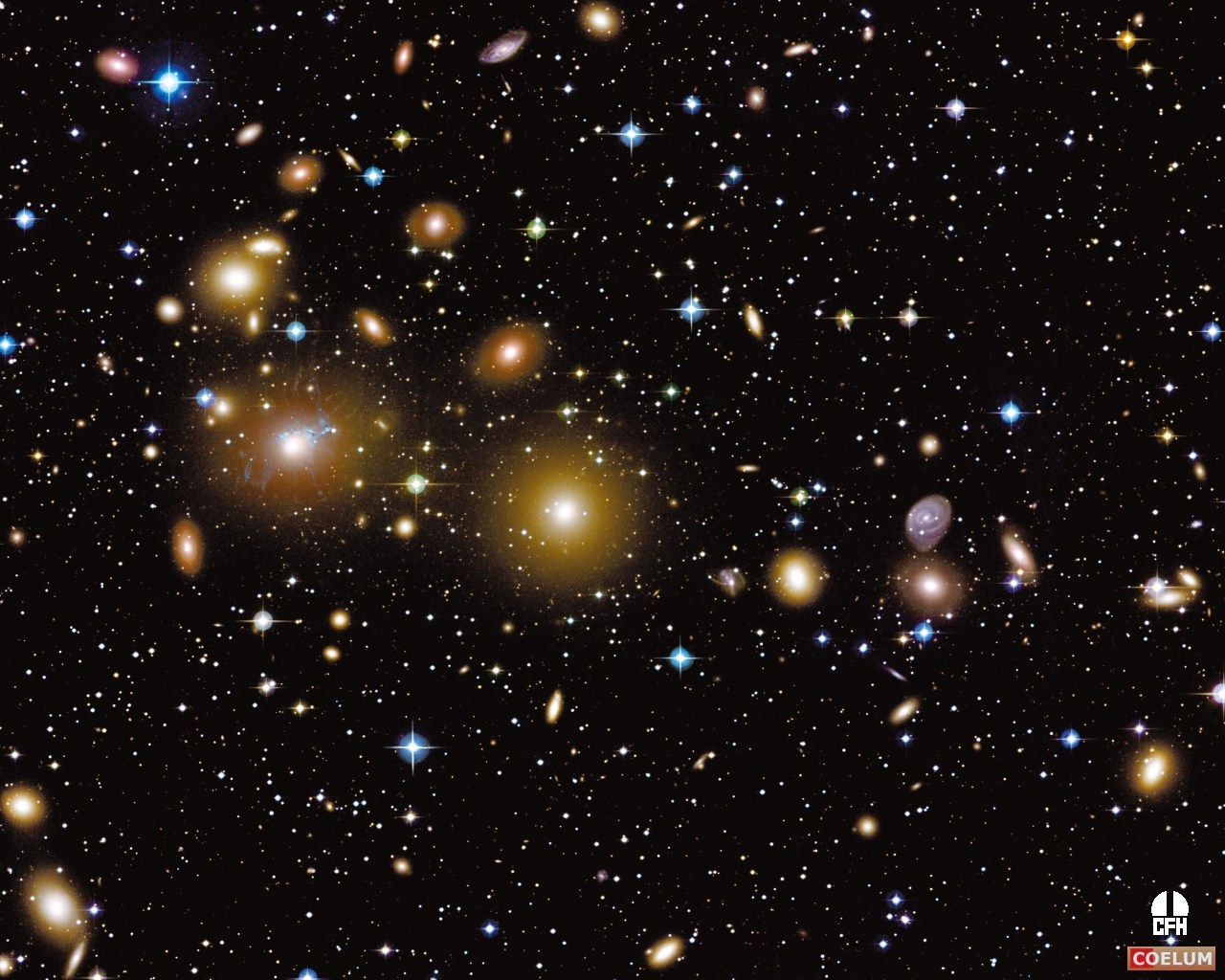
Gromada galaktyk w Perseuszu
Źródło i prawa autorskie:
Jean-Charles Cuillandre
(CFHT)
i Giovanni Anselmi
(Coelum Astronomia),
Hawaiian Starlight
Opis: Oto jeden z większych obiektów widzianych kiedykolwiek na niebie. Każda z rozmytych plamek na pokazanym zdjęciu jest galaktyką. Razem tworzą Gromadę Perseusza, jedną z bliższych gromad galaktyk. Gromadę widzimy z nałożonymi na pierwszym planie słabymi gwiazdami naszej własnej Galaktyki Drogi Mlecznej. Blisko centrum gromady, mniej więcej 250 milionów lat świetlnych stąd, znajduje się największa galaktyka w gromadzie NGC 1275, widziana powyżej, jako duża galaktyka po lewej stronie zdjęcia. Jest ona potężnym źródłem promieniowania rentgenowskiego oraz radiowego. NGC 1275 ściąga materię, jak gaz i galaktyki, która opada na nią. Gromada galaktyk w Perseuszu stanowi część supergromady Ryb-Perseusza, która rozciąga się na ponad 15 stopni i składa się z ponad 1000 galaktyk. Na odległości NGC 1275 powyższe pole widzenia obejmuje z grubsza 7,5 miliona lat świetlnych.
< | Archiwum | Lista tematyczna | Szukaj | Kalendarz | RSS | Edukacja | O APOD | Forum (po angielsku) | >
Autorzy i wydawcy:
Robert Nemiroff
(MTU) &
Jerry Bonnell (UMCP)
NASA Official: Phillip Newman
Specific rights apply.
NASA Web
Privacy Policy and Important Notices
A service of:
ASD at
NASA /
GSFC
& Michigan Tech. U.