APOD.pl: Astronomiczne zdjęcie dnia
Codziennie nowy obraz lub zdjęcie naszego fascynującego Wszechświata
wraz
z krótkim objaśnieniem napisanym przez zawodowego astronoma.
Zobacz więcej!
7 grudnia 2025
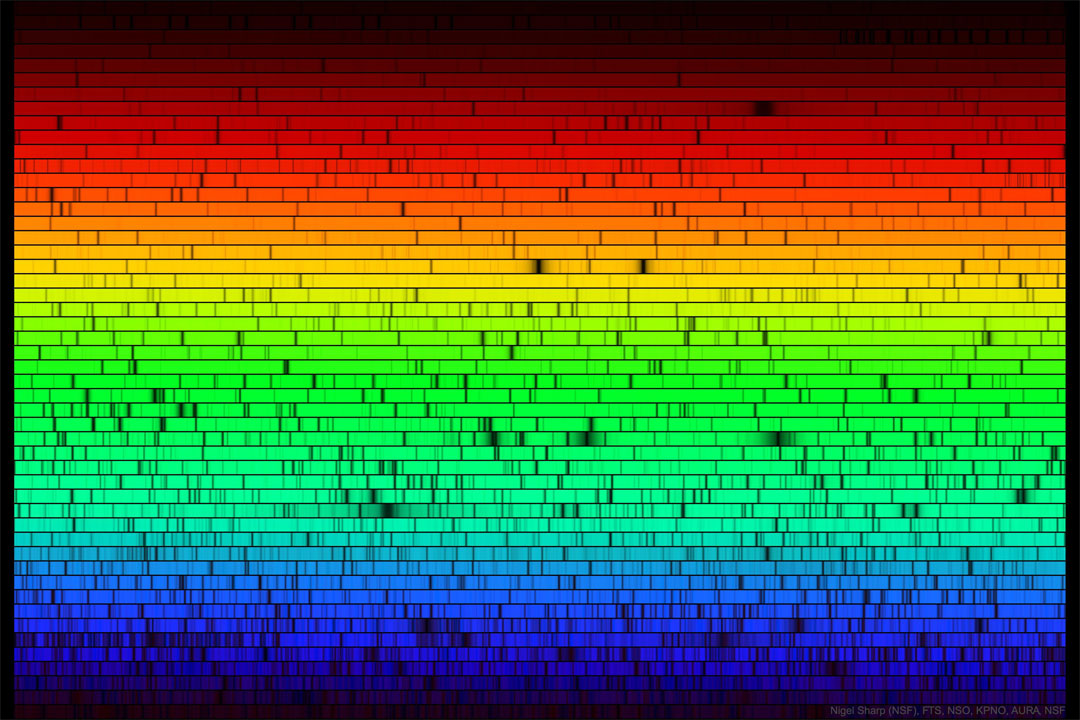
Słońce i jego brakujące kolory
Źródło:
Nigel Sharp (NSF),
FTS,
NSO,
KPNO,
AURA,
NSF
Opis:
Wciąż nie wiadomo, dlaczego w świetle Słońca brakuje niektórych kolorów.
Powyżej przedstawione zostały wszystkie widoczne kolory Słońca, powstałe przy
przejściu jego światła przez urządzenie podobne do pryzmatu.
Widmo powstało w Obserwatorium Słońca McMath-Pierce i przede wszystkim pokazuje, że choć wyglądające jako białe
Słońce emituje światło niemal każdej barwy, najjaśniejsze
jest w zakresie żółto-zielonym.
Ciemne plamy w przedstawionym widmie powstają,
gdy gaz na lub ponad powierzchnią Słońca pochłania światło docierające od spodu.
Ponieważ różne rodzaje gazu absorbują różne barwy
światła, możliwe jest określenie gazowego składu Słońca.
Na przykład hel został najpierw odkryty w 1868 roku w widmie słonecznym, a dopiero później znaleziony również na
Ziemi.
Obecnie znamy już większość absorpcyjnych linii
widmowych, ale nie wszystkie.
Darmowy wykład APOD-u w Phoenix:
środa (10 grudnia) o 19:00
Jutro: przelot nad Ziemią
<
| Archiwum
| Nadsyłanie
| Lista tematyczna
| Search
| Kalendarz
| RSS
| Edukacja
| O APOD
| Forum
| >
Autorzy i wydawcy:
Robert Nemiroff
(MTU) i
Jerry Bonnell (UMCP)
Przedstawiciel NASA: Amber Straughn,
obowiązują określone prawa.
Polityka prywatności NASA,
polityka dostępności NASA,
uwagi.
Serwis prowadzony przez:
ASD w
NASA /
GSFC,
NASA Science Activation
oraz Michigan Tech. U.